Great Scott Gadgets
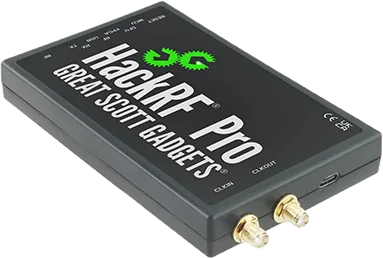
HackRF Pro Use the newer HackRF platform for wideband RF development.
Radio Software-defined radio
Radio equipment needs certification where you live (FCC, CE, UKCA, ISED, Anatel). Some devices are uncertified or restricted in Brazil. Buyers are responsible for their local law.
Bring along Host software, USB-C data cable and a suitable antenna.
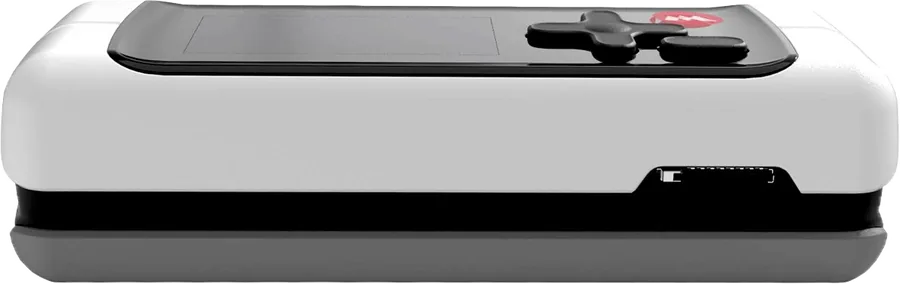
Keep in mind Extended sample modes depend on software; cable and antenna are not included. Source checked · Sep 16, 2026 Image credit Maker preliminary hardware photo · Great Scott Gadgets
Overview Blueprint 2 Specifications 22 Resources 12
(02) Blueprint
Build it yourself HackRF Pro (codename 'praline') ships full KiCad schematic/PCB under CERN-OHL-P-2.0; firmware/gateware is bundled with the shared HackRF firmware codebase.
Schematic 12 sheets Board KiCad HackRF Pro (praline) top-level schematic
Read straight from the maker’s repository. Open on GitHub
HackRF Pro (praline) top-level schematic
GitHub
2 git clone https://github.com/greatscottgadgets/hackrf-pro.git
Research notes Repo confirmed via gh api (CERN-OHL-P-2.0, 61 stars, pushed 2026-01-10). Chip part numbers confirmed by grepping raw mcu.kicad_sch/fpga.kicad_sch/adc-dac.kicad_sch/mixer.kicad_sch for lib_id references. iCE40UP5K matches what's already noted in the batch's known chip data.
Every link checked 2026-09-27.
Hand this device to your agent. Everything on this page, as clean Markdown and JSON: specs, shops, prices, design files, parts.
Made the HackRF Pro? Put the badge on your README; it links here, with every shop that sells it.
Copy Markdown
RF and processing 8 Operating range 100 kHz–6 GHz; half-duplex transmit or receive. Tuning boundary Tunes 0 Hz–7.1 GHz; the wider tuning span is not its rated operating range. Standard samples 8-bit I/Q at up to 20 MS/s. Half-precision mode 4-bit I/Q at up to 40 MS/s; trades precision for throughput. Extended precision 16-bit I/Q; ≥16× decimation/interpolation; typical effective resolution 9–11 bits. FPGA Lattice iCE40UP5K; gateware is bundled with firmware. DC-offset removal FPGA signal paths offer an optional DC blocker. RF controls Software-set gain/filter; switchable RF-port supply: 3.3 V, 50 mA. Ports and buying requirements 7 USB USB-C connector with high-speed USB 2.0 data; USB-powered. Host supply Shared HackRF host guide specifies 5 V, 500 mA and high-speed USB. RF connector SMA; an RP-SMA antenna needs an adapter. Clock and trigger P1/P2 default to CLKIN/CLKOUT; default clock interface is 10 MHz, 0–3.3 V. Timing and shielding TCXO, installed RF shielding and a hardware transmit-disable facility. Package Plastic enclosure included; USB-C data cable and antenna are separate. Add-ons Maker names Opera Cake, most PortaPacks and some enclosures; verify the exact accessory. Software and model boundary 7 Existing applications Designed to run HackRF One applications by default; new modes need application support. Install Official libhackrf/HackRF Tools guide provides Linux, macOS, FreeBSD and Windows paths. Firmware image Use hackrf_pro_usb.bin; HackRF One uses a different image. Recovery Use the model-specific .dfu image for DFU recovery, then the .bin image for flash. Reviewed release 2026.01.3 release notes include a mixer-lock fix and access to Pro’s larger flash. Initial revision Official revision list identifies r1.2.1 as the first production Pro. Design files Dedicated Pro repository publishes KiCad hardware files; software lives in the shared HackRF repository. No matching specification. Try a chip name, connector or feature.
What still needs checking A Pro-specific maximum RF-input power was not found in the reviewed official pages; HackRF One’s −5 dBm limit is not asserted for Pro. Availability of each new FPGA mode in a particular application/release remains untested. The product page still promises a forthcoming migration guide; do not promise a completed migration workflow.
Downloads & docs
Source & revision notes Maker listing checked Sep 15, 2026. Detailed documentation reviewed Sep 16, 2026. Not hands-on tested.
Price is a dated listing; confirm with the maker.
The current Pro page lists purchase channels. Older text on the HackRF One page still mentions Pro preorders; this entry follows the model-specific page and makes no stock promise.
The maker distinguishes the 100 kHz–6 GHz operating range from wider tunability. Extended 16-bit and 4-bit modes have sample-rate tradeoffs. The photograph is labeled preliminary by the maker.
Detailed documentation reviewed 2026-09-16; this does not refresh price or stock checks or establish hands-on testing.
The previous Lab401 buy link returned 404 on 2026-09-18 and was replaced with Elektor, which the maker lists as a reseller and which had it in stock at €429. The maker's own page lists around twenty resellers if that one is unsuitable.
The product page’s broad DC-spike claim is narrowed to the optional DC blocker documented in the gateware reference.
Build or list hardware with us HackRF Pro Great Scott Gadgets
Buy